+86 186 9588 1207 Mobile Phone
8618695881207 Whatsapp
+86 186 9588 1207 Wechat

info@biohuaer.com E-mail
+86 186 9588 1207 Mobile Phone
8618695881207 Whatsapp
+86 186 9588 1207 Wechat
info@biohuaer.com E-mail
Microneedling has become one of the most discussed skin rejuvenation methods in the beauty, aesthetics, and skincare industries. From micro infusion kits and derma rollers to professional microneedling pens, different devices use different needle depths, needle designs, and application methods.
However, needle depth is also one of the most misunderstood parts of microneedling.
Many people assume that “deeper” means “better.” In reality, the right microneedling depth depends on the skin concern, treatment area, device type, user skill level, hygiene control, and whether the treatment is performed at home or in a professional setting.
Important note: This article is for general educational and product-selection purposes only. It is not medical advice and should not be used as a self-treatment instruction.
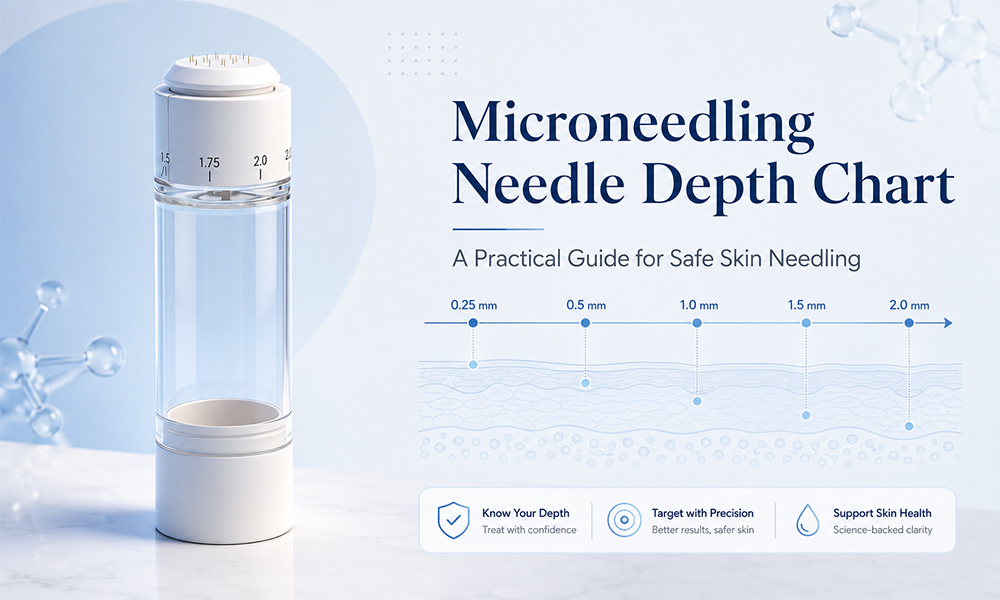
Microneedling needle depth refers to how far the needle is designed to penetrate into the skin during treatment. This depth is usually measured in millimeters, such as 0.25 mm, 0.5 mm, 1.0 mm, or 1.5 mm.
Different needle depths interact with the skin in different ways:
Very shallow depths are usually associated with cosmetic surface-level use and mild skin texture improvement.
Moderate depths are more commonly discussed for visible skin texture and fine lines.
Deeper depths are generally associated with professional microneedling procedures.
Needle depth should not be selected casually. The same depth may be tolerated differently depending on the treatment area, skin thickness, skin sensitivity, device design, and operator experience.
| Skin Concern or Use Case | Commonly Discussed Depth Range | General Positioning |
|---|---|---|
| Product absorption support | 0.2–0.3 mm | Cosmetic surface-level support |
| Mild skin texture | 0.25–0.5 mm | Gentle cosmetic use |
| Enlarged pores | 0.25–0.5 mm | Surface texture improvement support |
| Fine lines | 0.25–0.5 mm | Mild rejuvenation support |
| Uneven tone appearance | 0.25–0.5 mm | Cosmetic brightening routine support |
| Shallow acne marks | 0.5–1.0 mm | Often better evaluated by trained professionals |
| Deeper acne scars | 1.0–1.5 mm+ | Professional-use category |
| Stretch marks | 1.0–2.0 mm+ | Usually professional or body-area use |
| Body skin texture | 1.0 mm+ | Depends on area and concern |
The key point is simple: deeper needles are not automatically better.
| Face Area | General Consideration |
|---|---|
| Forehead | The skin is thinner and closer to bone, so conservative depth selection is important. |
| Under-eye area | This is a delicate area and should be approached with caution. |
| Cheeks | Cheeks may tolerate a wider range depending on the concern. |
| Nose | The nose has uneven contours and requires better control. |
| Around mouth | This area can be sensitive and prone to irritation. |
| Neck | Neck skin is thinner and more delicate than many facial areas. |
| Body areas | Body skin may be thicker but still requires hygiene control. |
At-home products are usually positioned for mild cosmetic support. They should focus on controlled use, shallow depth, hygiene, and simple instructions.
Skin texture support
Cosmetic routine enhancement
Product application support
Gentle appearance improvement
Disposable or hygienic design
At-home products should avoid strong medical treatment claims.
Micro infusion kits are often designed differently from traditional derma rollers or adjustable microneedling pens. Many micro infusion products use short, fine needles to support cosmetic serum delivery.
For skincare brands, important questions include:
Is the needle head disposable?
Is the needle length fixed and controlled?
Is the serum formula suitable for cosmetic use?
Is the packaging hygienic and retail-ready?
Are instructions clear for end users?
Are claims compliant for the target market?
Professional microneedling pens may offer adjustable depths and more treatment flexibility. However, they also require higher training standards and stronger hygiene protocols.
Beauty clinics
Aesthetic centers
Med spas
Dermatology-related settings
Licensed professionals
RF microneedling combines microneedling with radiofrequency energy. It belongs to a more advanced professional treatment category.
This range is commonly associated with shallow cosmetic use and product absorption support.
Skincare routine enhancement
Mild texture support
Product application support
Low-discomfort cosmetic use
0.5 mm is commonly discussed for mild skin texture concerns and early signs of aging.
Depths around 1.0 mm and above are more commonly associated with professional settings.
Needles should be sharp, consistent, and manufactured with stable quality control.
Needle count affects how the device contacts the skin.
Disposable needle heads are important for hygiene and user confidence.
Not every serum is suitable for use with microneedling or micro infusion products.
Packaging should communicate hygiene, safety, and professional quality.
Good instructions should explain:
Who should not use the product
How to prepare the skin
How to use the device safely
What products to avoid
When to stop use
How to dispose of needle heads
When to seek professional advice
Microneedling-related products can fall into different regulatory categories depending on the market and intended use.
| Safety Question | Why It Matters |
|---|---|
| Is the device intended for cosmetic or professional use? | Different use levels require different instructions. |
| Is the needle depth fixed or adjustable? | Adjustable depth increases misuse risk. |
| Are needle heads disposable? | Disposable design supports hygiene. |
| Is the serum suitable for needling routines? | Unsuitable formulas may increase skin reactions. |
| Are the instructions clear? | Users need accurate safety guidance. |
| Are there warnings for sensitive skin? | Some users should avoid microneedling. |
| Are claims compliant? | Overstated claims create regulatory risks. |
| Is the supplier experienced with OEM/ODM devices? | Manufacturing quality affects brand reputation. |
Deeper penetration may sound more powerful, but it also increases the chance of discomfort and unwanted reactions.
The forehead, cheeks, nose, neck, and body do not have the same skin thickness or sensitivity.
Micro infusion kits and professional microneedling devices should not be positioned the same way.
Needle-based beauty products require hygiene awareness.
Brands should keep claims accurate and aligned with product category.
The supplier should clearly explain whether the product is positioned as:
A cosmetic micro infusion kit
A home-use beauty tool
A professional-use microneedling device
A clinic-oriented treatment accessory
A private label skincare system
A capable manufacturer should support:
Logo customization
Device color customization
Packaging design
Serum pairing options
Needle head configuration
Instruction manual customization
Retail kit assembly
MOQ planning
Microneedling products require consistent manufacturing.
A supplier should help brands position products responsibly.
A microneedling product can be developed into multiple SKUs.
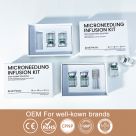
A customizable micro infusion kit designed for skincare brands, beauty retailers, and private label projects. It combines controlled needle design, serum pairing, hygienic packaging, and brand-ready customization to support modern skincare routines.
There is no single best microneedling depth for everyone. The appropriate depth depends on the skin concern, treatment area, device type, and user experience.
0.25 mm is commonly discussed for shallow cosmetic support and product absorption routines.
0.5 mm is more intensive than very shallow cosmetic depths and should be approached carefully.
Acne scars are usually more complex than mild texture concerns and are better evaluated by trained professionals.
Many micro infusion kits use short, controlled needles designed for cosmetic serum application support.
The under-eye area is delicate and should be approached conservatively.
No. RF microneedling combines needles with radiofrequency energy and belongs to a more advanced professional treatment category.
A microneedling needle depth chart can be useful, but it should not be treated as a simple “deeper is better” guide.
For skincare brands and private label buyers, the most important question is:
What product experience are we building, who will use it, and how can we make it safe, clear, hygienic, and brand-ready?
A reliable micro infusion or microneedling device supplier should help you evaluate needle design, serum compatibility, packaging, instructions, and customization options.
Looking to develop your own private label micro infusion kit?
We support skincare brands, beauty clinics, distributors, and OEM/ODM projects with customizable micro infusion devices, serum pairing options, retail packaging, logo branding, and bulk production support.
Contact us to discuss your target market, product positioning, packaging style, and customization requirements.
 Add to Inquiry Successfully!